
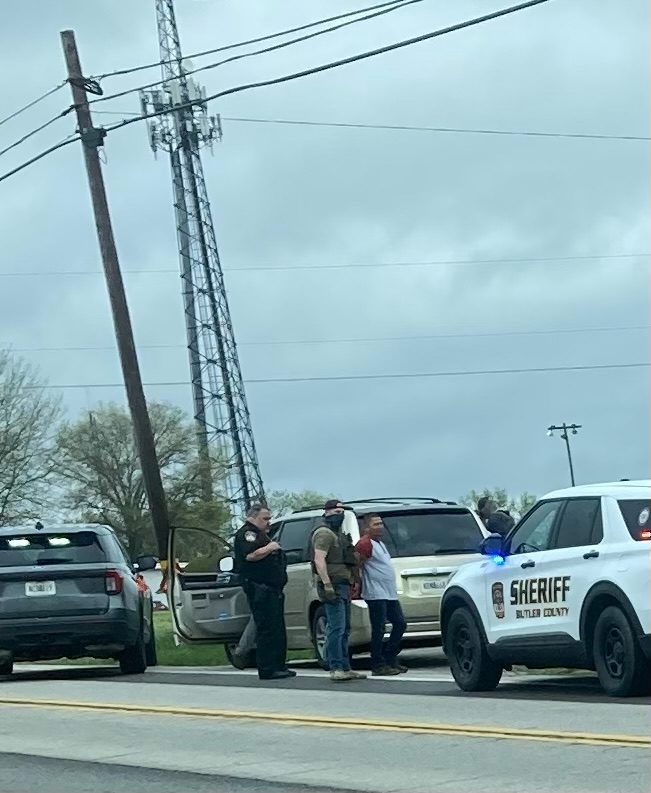
This arrest occurred at the Buffalo and Clinton Township line on Ekastown Road at Coal Hollow Road. I, personally, rolled up on this while it was occurring. Three unmarked police units; one Butler County Sheriff Department unit; subject’s car blocked; escorting officer identity protected; subject in custody . . . it was not reported on local news. POINT: Bad things can happen anywhere and at any time. “Chance Favors Those Who are Prepared!”
When emergencies happen, the first person responsible for personal safety is often the individual directly involved. Private citizens frequently become the true “first responders” in situations involving crime, violence, accidents, or threats because law enforcement officers cannot be everywhere at once. The concept of private citizen first response emphasizes preparedness, awareness, and the ability to protect oneself and others during the critical moments before professional help arrives.
Law enforcement agencies provide an essential public service, but response times vary widely depending on location, staffing levels, traffic conditions, weather, call volume, and the severity of the emergency. In urban areas, police may arrive within a few minutes for high-priority calls. In suburban or rural communities, however, response times can be significantly longer.
The average law enforcement response time to high-priority 911 calls in the USA is approximately 5 to 10 minutes in urban areas, though this often increases to 15 minutes or more in rural locations. During periods of heavy demand, even cities with large police departments may experience delays. Dispatchers must prioritize calls according to immediate danger, meaning officers may already be handling violent incidents. The dispatcher must also assess the number of emergency professionals necessary and available to safely respond. Additionally, they need to consider medical emergencies, or traffic accidents when another call comes in.
Notably, many suburban and rural communities have part-time or no law enforcement. In Pennsylvania, first response by law enforcement in these communities is the responsibility of State Troopers. Significantly longer periods of response time are common in these instances.
Studies and public reports from police departments across the United States often show average response times ranging from several minutes to much longer depending on circumstances. Even a five-minute response can feel extremely long during a dangerous encounter. In many violent situations, events unfold in seconds rather than minutes. This reality brings into consideration how you can responsibly prepare to protect yourself and your family before law enforcement arrives.
Private citizen first response does not only refer to armed self-defense. It also includes situational awareness, de-escalation, emergency medical training, secure home practices, and communication skills. Citizens who know how to recognize danger early are often better positioned to avoid confrontation altogether. Basic precautions such as locking doors, maintaining outdoor lighting, monitoring surroundings, and having emergency plans can reduce vulnerability and improve safety.
Simply put “Chance favors those who are prepared!”
Personal safety and self-defense training develops confidence and practical skills that are necessary during threatening situations. Martial arts, verbal de-escalation, and defensive tactics teach people how to react under stress and potentially escape danger. Others choose to own defensive tools, including pepper spray or firearms, depending on their personal comfort levels. Notably, responsible ownership requires training, understanding of the law, safe storage practices, and emotional discipline. The goals of self-defense are always safety, protection, and survival.
Emergency medical knowledge is another critical part of first response. In accidents or violent incidents, immediate first aid may save lives before paramedics arrive. Training in CPR, bleeding control, and trauma response equips citizens to help injured people during those first critical moments. Programs such as “Stop the Bleed” and community CPR certification courses empower ordinary people to act effectively during emergencies.
Ultimately, the relationship between private citizens and law enforcement should be cooperative. Police officers serve a vital role in investigating crimes, apprehending offenders, and restoring public order, but they cannot instantly appear at every emergency. Citizens who prepare responsibly, remain alert, and understand basic safety principles can improve their own chances of surviving dangerous situations until professional responders arrive on the scene. Personal responsibility, preparedness, and sound judgment remain important components of public safety in any community.
Individual and group training for business, organizations, churches, schools, clubs, etc. is available at Makowski’s Martial Arts and Fitness (www.sarverata.com) and Community One Public Safety Training Initiative (https://cops-1.org) . Training opportunities address myriad of subjects covered in this article and can be custom suited to specific needs. For more information, visit the web site(s) and call 724-841-4555.
Key 2024–2025 Victimization Statistics [1] – Violent Crimes happen everywhere; even in your community. Many people don’t choose or like to think about it. However, it is a reality that is not to be ignored. We often hear, “Nothing happens here” and “That won’t happen to me” or “I can handle myself”. If that is your mindset, you are at risk and only fooling yourself.
- Risk Rate: 1.45% of persons age 12+ experienced violent crime in 2024.
- Incidence Rate: 23.3 violent victimizations per 1,000 people.
- Reporting: Only about 48% of violent crimes were reported to police in 2024. So, “risk” and “incident” rates are significantly higher.
- Demographic Risk: Individuals aged 12–17 had a higher victimization rate (1.95%) compared to the general population in 2024. [1, 2]
Violent Crime Breakdown (2024 Estimates)
- Murder: 1 murder occurred roughly every 31.1 minutes.
- Rape: 1 rape occurred roughly every 4.1 minutes.
- Robbery: 1 robbery occurred roughly every 1.5 minutes.
- Aggravated Assault: 1 occurred roughly every 39.5 seconds. [1, 2]
Factors Affecting Risk
- Location: Urban areas consistently experience higher rates of violent victimization (24.5 per 1,000) compared to suburban and rural areas.
- Age: Young people (12–24) are statistically at the highest risk for experiencing serious violent crime.
- Offender Relationship: Most violent incidents against victims were committed by someone of the same race/ethnicity, and victims often know their attacker. [1, 2, 3]
Note: These statistics are based on the Bureau of Justice Statistics’ National Crime Victimization Survey (NCVS) and the FBI’s Uniform Crime Reporting (UCR) Program, which define violent crime as rape/sexual assault, robbery, aggravated assault, and simple assault. [1, 2, 3, 4]